System-Level PCB Design Approach
A structured system design approach is essential in professional electronics because it ensures reliability, scalability, and compliance while significantly reducing cost and development risks. It reduces design failures, saves cost, improves reliability, ensures compliance, reduces risk, and accelerates development.
When starting a new project, I first identify and document all requirements and functionalities. Based on these, I create a high-level system design that outlines how the overall system will operate.
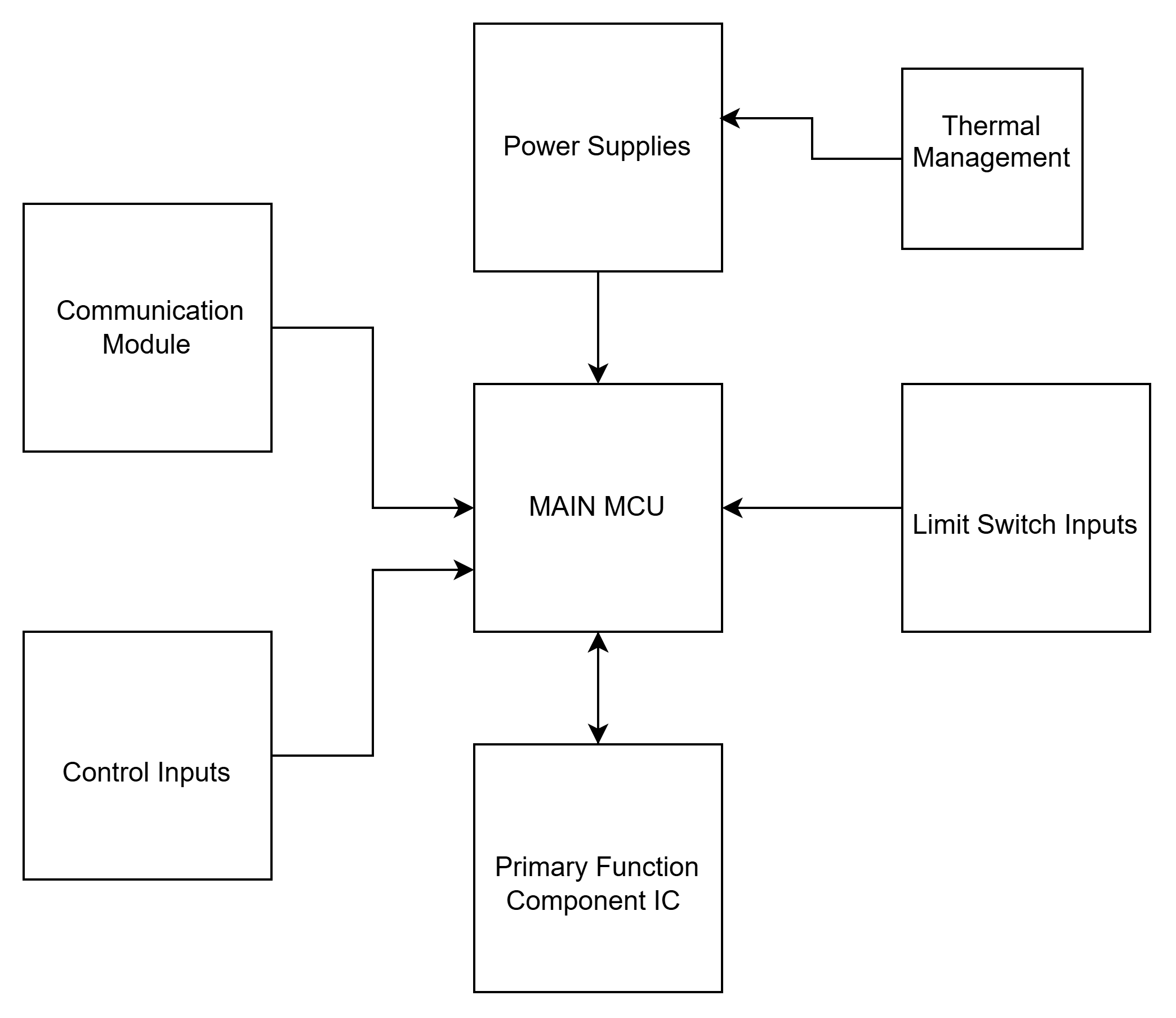
Every PCB design typically includes a main microcontroller (such as an ESP32 or another MCU based on system requirements) that controls and processes the system. The board also includes a primary functional component or module, which performs the core task of the system, with its signals processed and managed by the microcontroller.
For safety and protection, designs often include input protection circuits, such as limit switches and optoisolators, to safeguard components from faults or high-voltage conditions. Each system requires a power supply section, along with appropriate thermal management to ensure reliable operation under extreme conditions. Finally, most systems include a communication interface, either wired (e.g., RS485) or wireless, to enable data exchange and control.
Component Selection
After defining the system design, the next step is component selection. Key electronic components are sourced from trusted distributors such as Mouser Electronics and Digi-Key, while PCB fabrication and assembly are commonly handled by manufacturers like PCBWay and JLCPCB.
Selecting components from reputable manufacturers is critical to ensure reliability, safety, and performance. Well-known and trusted component manufacturers include:
- Samsung Electronics
- Vishay Intertechnology
- Texas Instruments
- Analog Devices
- STMicroelectronics
- Murata Manufacturing
- TDK Corporation
- NXP Semiconductors
Using components from these established manufacturers helps ensure that the design meets industry standards and long-term reliability requirements.
Conclusion
A proper PCB system design and component selection ensures that a product works reliably without major issues later. By following a clear process, we can avoid mistakes, save time and money, and build systems that perform well in real-world conditions.