Custom RFID Reader for Wireless Chemical Sensing
Description
As there's a greater demand of wireless chemical detection, this project was on R&D phase and where it focused on ways of detecting chemicals from the environment. One solution that was the most promising was the development of RF system as RF waves can: • Travel long distances • Penetrate materials like plastic, wood, walls (partially) So my work started on creation of customised RF_Id reader as most of the commerical RF readers in the market are secured and cannot be used to detect raw signals such as I/Q data, Backscatter of signals details this acts a limitation for our research. This was all possible due to an opportunity to work with Dr Said and Prof Dusan.
Process Overview
We started with utilising off the shelf rfid reader from Alibaba to read the rf tags to understand how the process works, I understood there are several channels in a particular RF spectrum in which signals propagate and according to industrial standard EPC Gen 2 Protocol is used in the industry for Tag reading
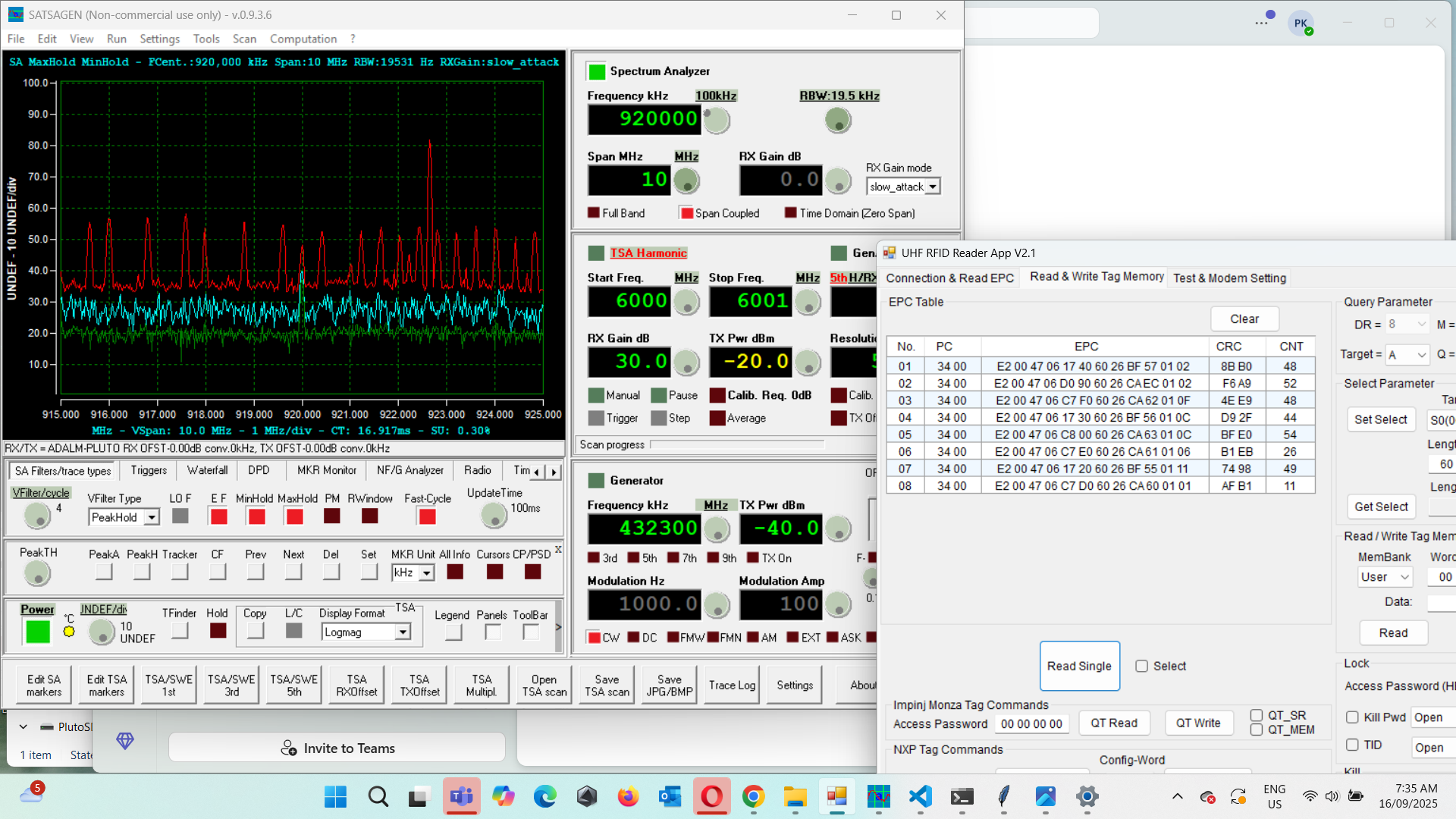
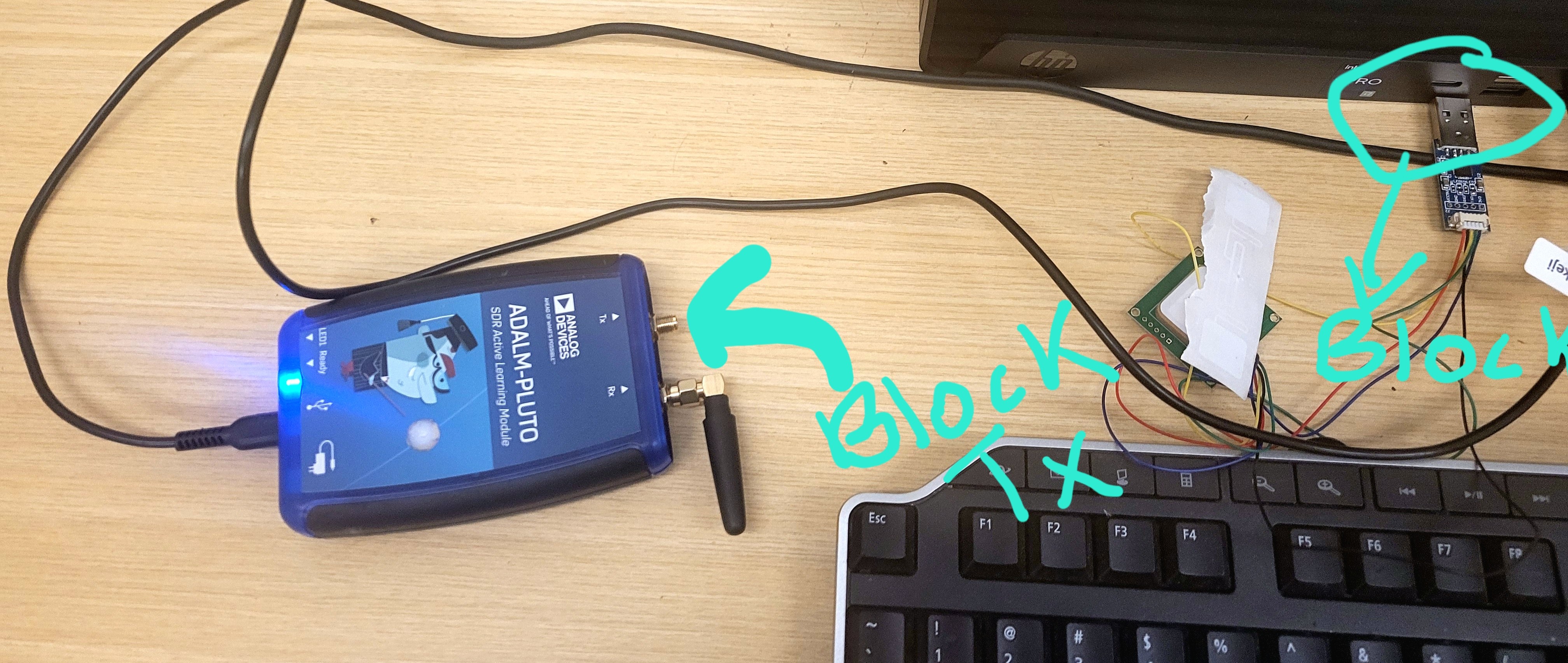
Then I utilised spectrum analyser for detecting the communication of RF Tag with the alibaba based rfid reader but still it was a propriterary hardware and software I cannot fully edit or modify the siganls accoring to the reuqirements. Then I started to use PlutoSDR hardware as it provides modifiable software solution I created python script first creating a customised sprectrum analyser for analsis if the signals are transmititng from the PlutoSDR I tried several ways but still wasnt able to transmit signal only I was able to receive signals to the plutoSDR
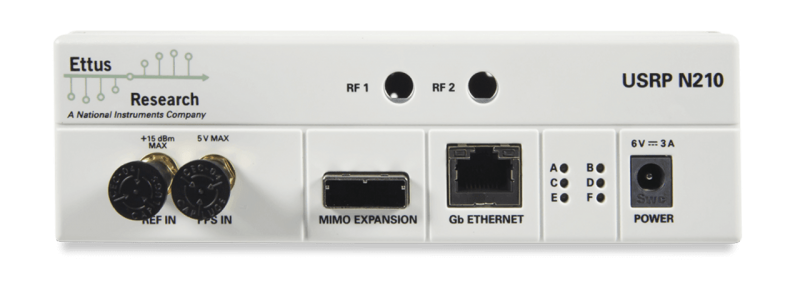
Later I switched to USRP as it was available from one of the labs, I started using with integrating Ubuntu 22.04 LTS with the default flavor GNOME in Linux for configuring and using USRP, later I started making small algorithms to test USRP with C
Components Used
Hardware Components
• Alibaba RFID Reader (Initial tag communication testing)
• Arduino Uno (Signal interfacing and processing)
• ADALM Pluto SDR (Custom spectrum analysis and I/Q transmission)
• RTL-SDR (Spectrum channel detection)
• Spectrum Analyzer (Lab-based RF signal analysis)
• USRP N210 (Custom EPC Gen2 RFID reader development)
• Gen2 RF Tags (Testing and signal analysis)
These components were selected to enable full control over RF signals and allow detailed experimentation with RFID communication.
Software Components
• SATSAGEN (Open-source spectrum analysis tool)
• UHF RFID Reader App (Tag detection and analysis)
• Python (Signal processing and SDR programming)
• Linux Ubuntu 22.04 (Development environment)
• GNU Radio (Wireless signal processing framework)
Design & Planning
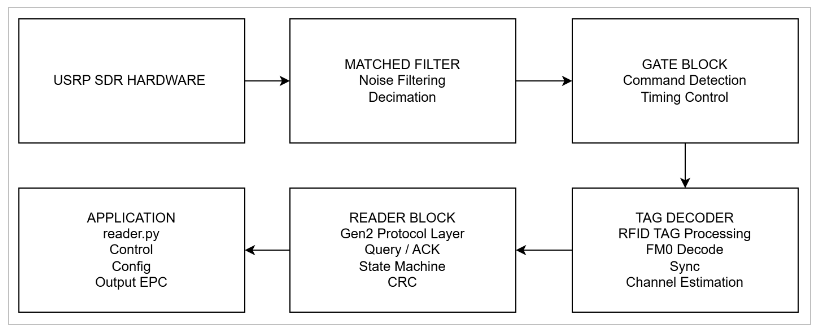
The main design was based on research papers and open-source implementations of EPC Gen2 protocol. The system includes both physical layer processing (modulation, decoding) and protocol layer implementation (Query, ACK, anti-collision). The design focused on building a fully software-defined architecture to gain complete control over signal behavior and timing.
RF Signal Architecture
The whole wireless signal processing have several important algorithm according of reading EPC Gen2 tags from doing fm0 decoding to generating Query command and other important commands. I have designed full signal lifecycle and the time it takes from command to command and all the bits involed for each command in my research documentation, I’m just giving an overview of the whole signal architecture
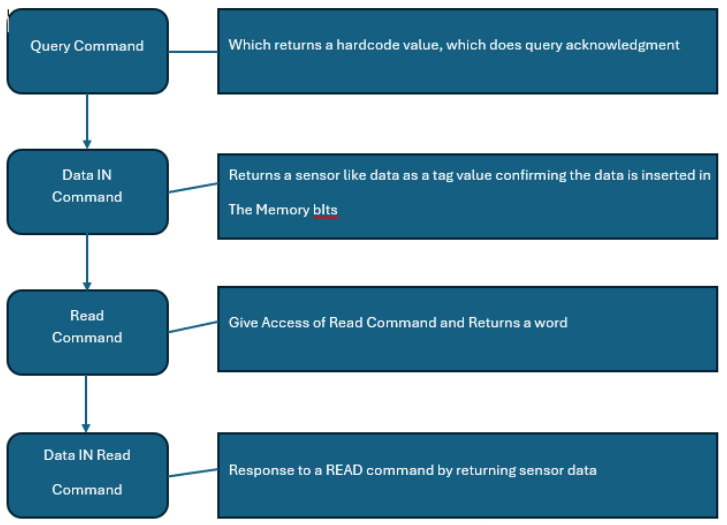
The BLF is calculated using the symbol duration derived from TRcal and divide ratio (DR). In this project, with DR = 8 and TRcal = 25 µs, the BLF was calculated to be approximately 320 kHz. This value is essential for accurate FM0 decoding, timing recovery, and proper signal interpretation in SDR systems.
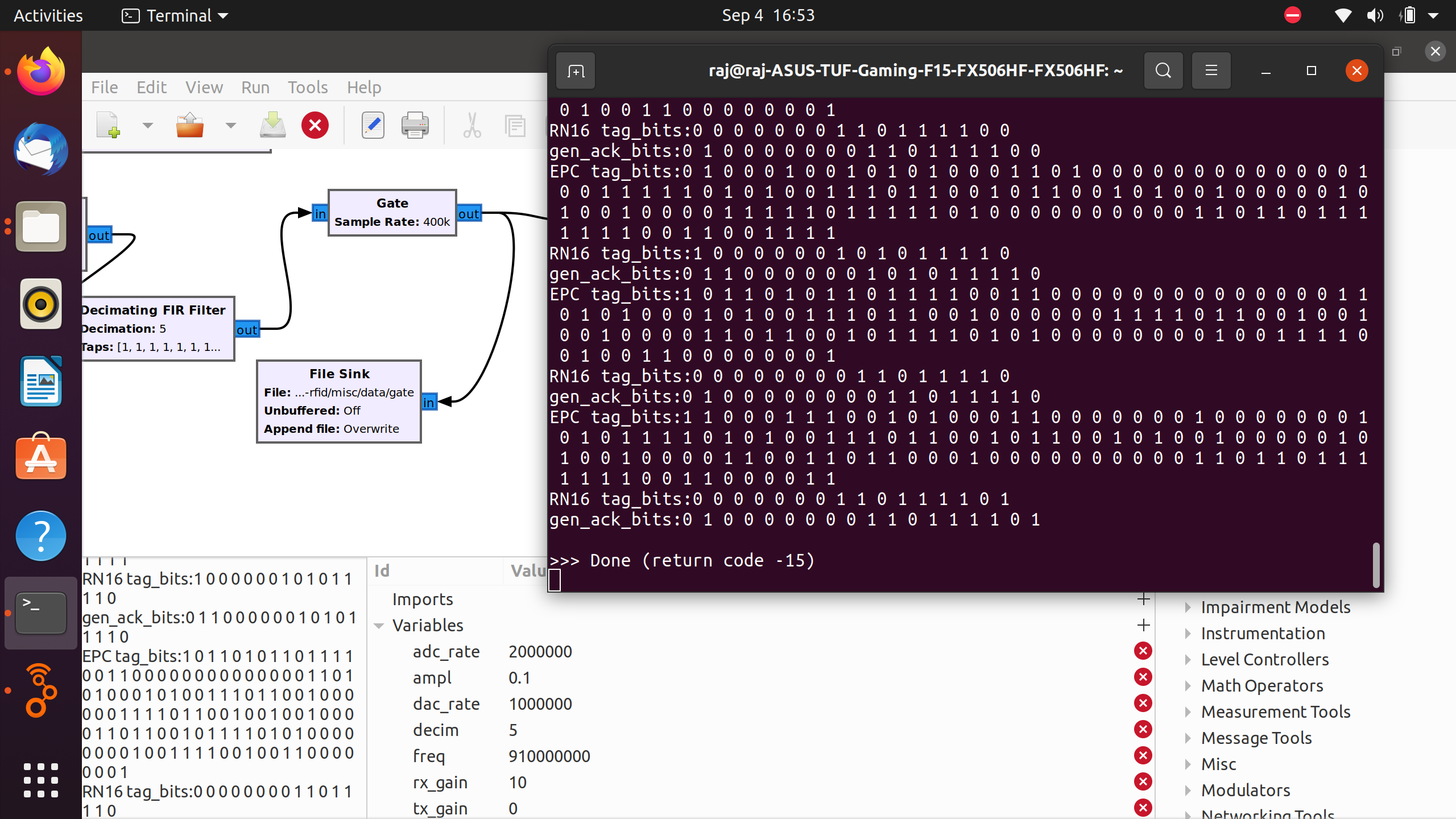
I dont have the exact architecture image saved from GNU Radio but it looks something like below:
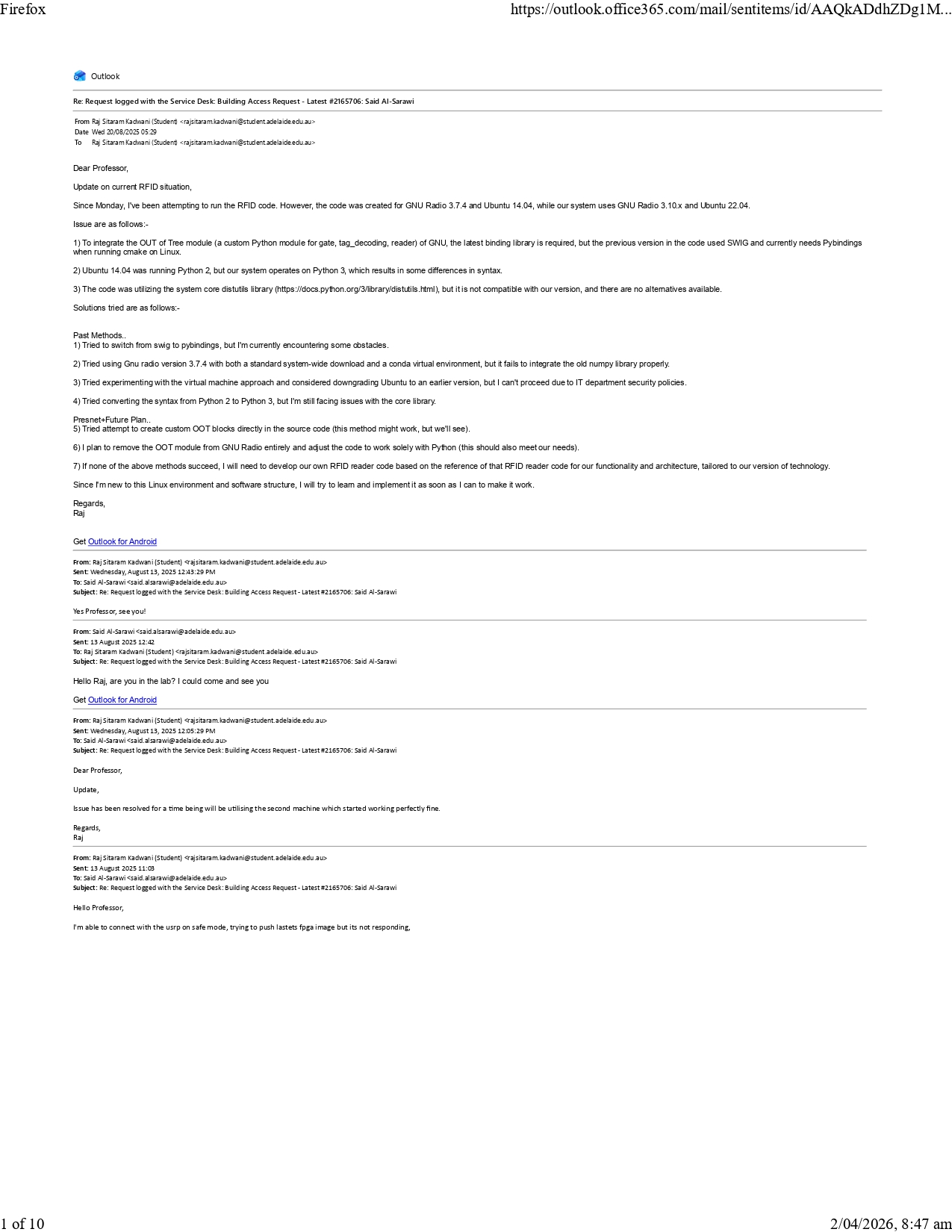
also everyday conversation snippet about the progress with the professor
Results
After several attempts, I was finally able to run the customized RFID reader as shown below, the USRP started transmitting 1000 Queries in total each iteration
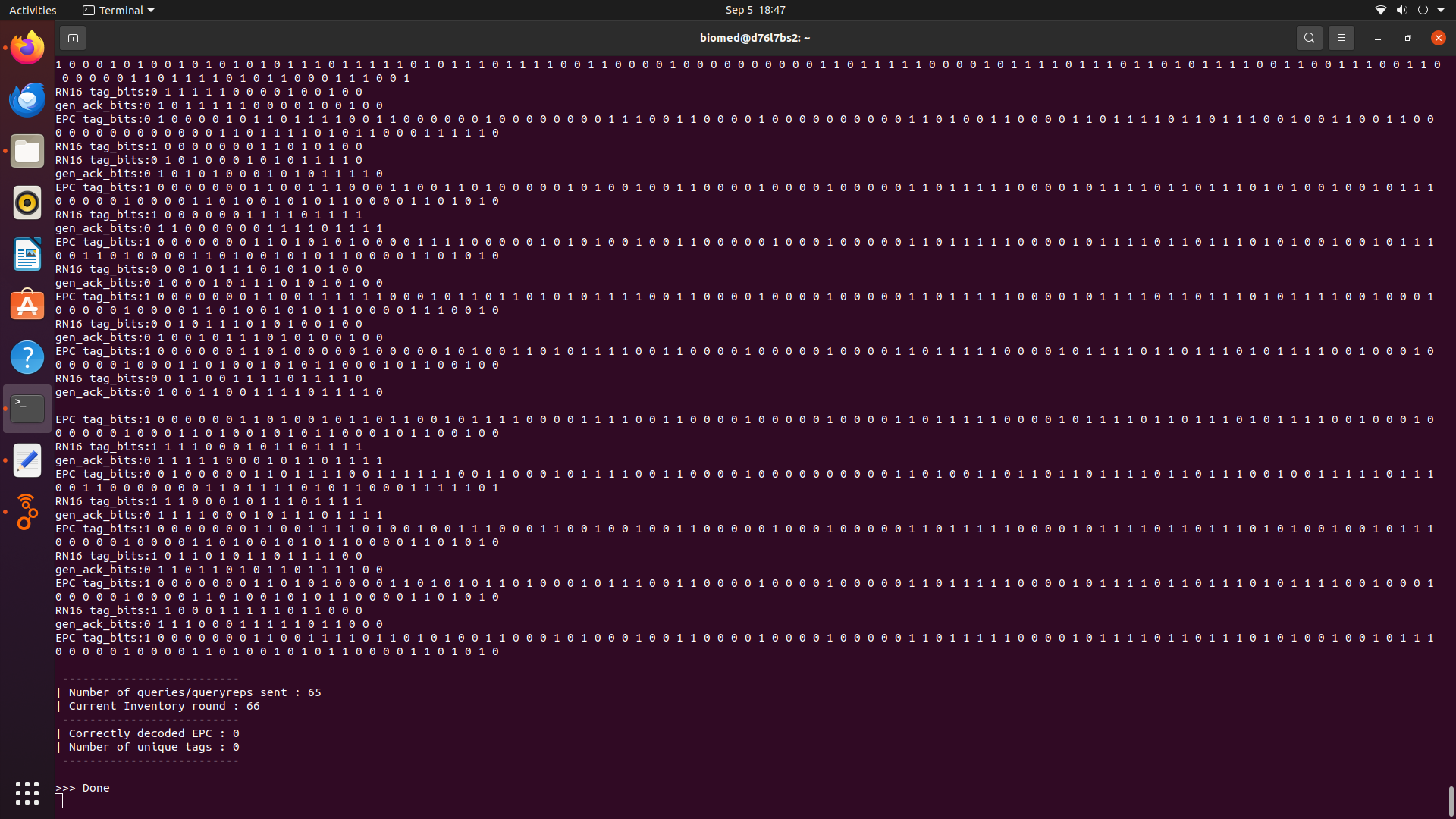
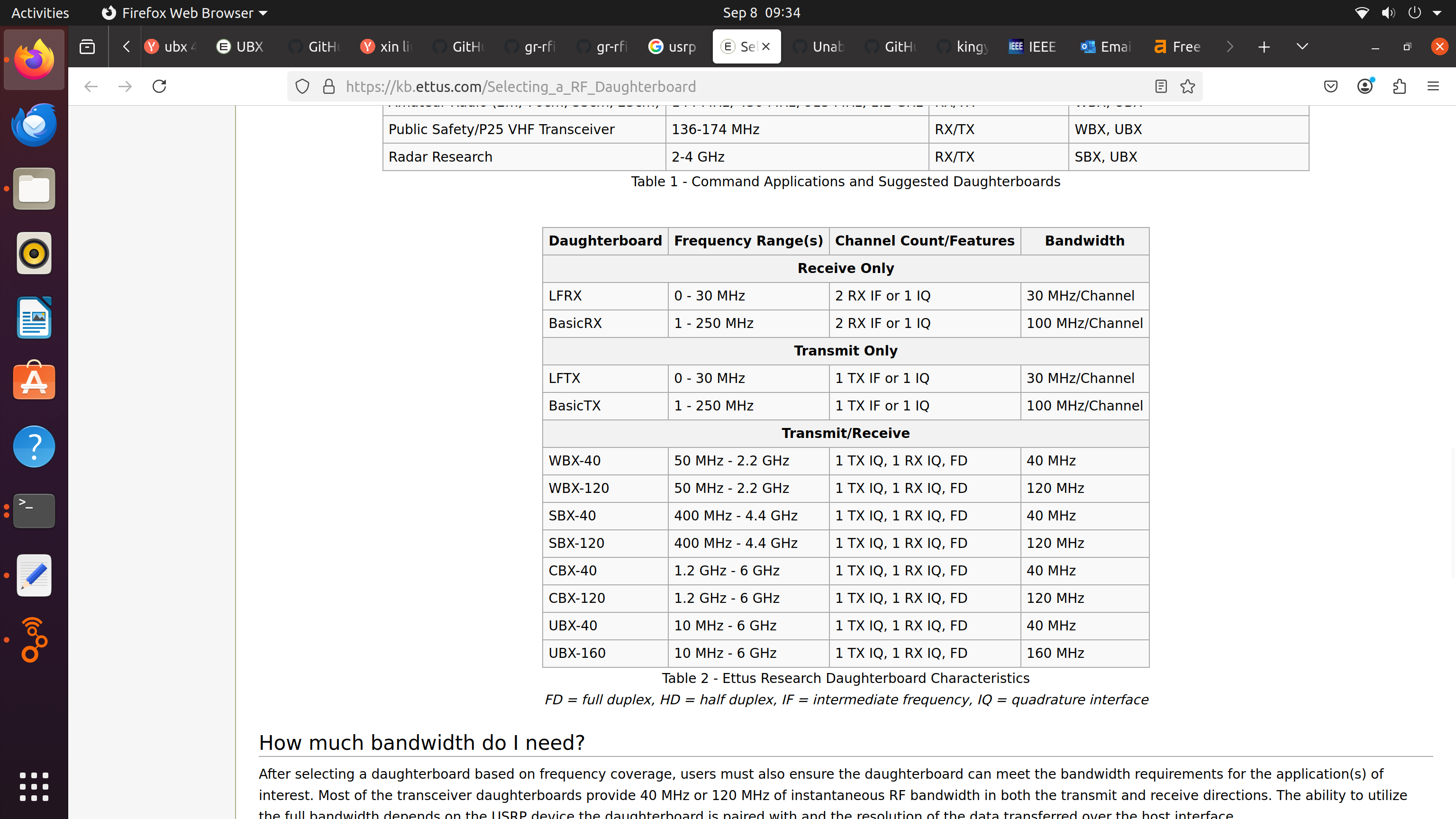
Then came the final problem with out USRP Board R200 does not have the capability of receiving the RF signal as the daughter board does not have the capability as sowns from the offical USRP website. Additionally, I left for India in the Month of November as I Graduated in August and Stayed on this project till November now this project is transferred to a new student Bilal who is working parallel with Dr Said and Prof Dusan.
Conclusion
This project successfully built a complete EPC Gen2 UHF RFID reader system using Software Defined Radios like the USRP N210, ADALM Pluto SDR, and RTL-SDR, along with tools such as GNU Radio, Python, and Linux. Unlike commercial RFID readers, which are usually closed and limited, this system allowed full control over how signals are transmitted and received, including modulation, decoding, and anti-collision processes. It helped in understanding how RFID communication works at a deeper level, especially backscatter signals and real-time processing. Looking ahead, RFID technology has strong potential for wireless chemical sensing by combining RFID tags with materials like graphene, allowing sensors to work without batteries and detect environmental changes remotely. This makes the system low-cost, scalable, and useful for many applications like industry, environment monitoring, and healthcare. Overall, this project shows that RFID can go beyond simple identification and become a smart sensing technology for future IoT systems.